A roll that looks correct on its label can still cause short wraps, uneven folds, grease breakthrough, machine stoppages, or rejected food-contact packaging. You need a specification that identifies the paper construction, measurable roll controls, intended food exposure, and acceptance checks so every delivery can be compared with the purchase order.
Key takeaways
- Define fat, moisture, temperature, contact time, and sealing needs first.
- Compare roll width, basis weight, coating, core size, and winding quality.
- Check delivered rolls against the purchase order before production use.
- Record batch details and process results so repeat orders stay consistent.
Define the Paper Before You Compare Rolls
Start with the food and process, not the phrase butter paper: identify the food’s fat and moisture level, contact time, temperature, wrapping speed, and whether the pack must be folded or heat-sealed. Those conditions determine the butter paper specification.
| Construction | Grease and moisture behaviour | Packaging consequence |
|---|---|---|
| Greaseproof paper | Resists grease but offers limited moisture protection | Suits bakery items, butter, and short-contact wraps |
| Glassine paper | Smooth, dense, and grease-resistant; weak against prolonged moisture | Works for visible, neat wraps where folding matters |
| Parchmentised paper | Strong grease resistance with better wet strength | Suits oily foods and handling during chilled or damp conditions |
| Coated paper or paper/foil laminate | Barrier depends on coating, foil, adhesive, and seal layer | Use for high grease, moisture, light, or heat-sealing demands |
Ask for the complete construction, basis weight, caliper, coating or laminate details, and intended food-contact conditions. For U.S. supply, check whether 21 CFR 176.170 covers aqueous and fatty contact or 21 CFR 176.180 covers dry food. For Europe, request a risk assessment and migration or extractive test support under Regulation (EC) No. 1935/2004.
A “food grade” label alone is not enough: every layer can affect migration, odour, sealing, and compliance. Obtain a destination-specific recyclability assessment for laminated or coated grades; paper content alone does not prove repulpability.
Controls That Keep One Roll Like the Next
A repeatable roll starts with web controls, not the label on the finished package. GSM control keeps paper weight within the agreed range, while caliper and moisture checks prevent changes in stiffness, folding behaviour, and friction during unwinding.
Test specimens need the same conditioning and sampling method each time; paper exposed to different relative humidity can appear to have changed furnish or coating when only its moisture has changed.
| Control | How the manufacturer controls it | Failure it prevents |
|---|---|---|
| GSM and caliper | Samples the web at defined intervals and records results against tolerance | Uneven handling, opacity, tear strength, or folding |
| Roll width tolerance | Slits to a controlled width and checks both edges before winding | Misalignment in cutters, folders, or wrapper guides |
| Winding tension | Sets tension for the paper grade and monitors roll hardness across the web | Loose layers, crushed edges, blocking, or erratic unwinding |
| Core dimensions | Verifies core inside diameter, outside diameter, length, and squareness | Chuck slippage, wobble, or inability to mount the roll |
| Alignment and splices | Limits telescoping and flags splice position, tape, and construction | Web wandering, tearing, or an unplanned machine stop |
The purchase specification should state GSM, width, length, roll diameter, core dimensions, winding tension or hardness limits, splice rules, and acceptable roll-to-roll variation. A certificate of analysis should link those results to the batch number.
Retained reference samples let the manufacturer compare a repeat order with an approved roll. Batch records should capture the paper grade, machine settings, inspection results, and deviations so a replacement addresses the process failure rather than merely repeating the shipment.
Check the Delivery Against the Purchase Order
Accept a roll only after incoming quality inspection confirms both the paper and the converting dimensions against the purchase order. Check the batch number, product construction, roll label, packaging damage, and certificate of analysis before releasing material to production.
Do not accept “butter paper” as the only description; match the stated grade, GSM, width, length, core size, and tolerance.
1. Measure GSM from a conditioned sample taken across the web. Cut a known area, weigh it on a calibrated scale, and calculate weight in grams per square metre. Compare the result with the purchase-order tolerance; an incorrect GSM changes folding, tear resistance, opacity, and machine handling.
2. Verify width at several points along the roll with a steel rule or calibrated tape. Record the narrowest and widest readings, then compare roll-to-roll variation with the agreed limit. A narrow edge can cause tracking and cutting failures.
3. Perform roll length measurement with the supplier’s meter reading, a calibrated length counter during rewinding, or another documented method. Do not accept the printed label alone. Record roll diameter, winding alignment, telescoping, splice position, and core dimensions.
4. Weigh each roll and subtract the core weight and packaging weight to calculate net paper weight. Compare it with the expected weight from GSM, width, and length. Quarantine rolls with wet packaging, crushed cores, loose winding, broken splices, damaged edges, unexplained weight differences, or measurements outside tolerance.
Keep the quarantine record linked to the batch number, photographs, readings, and sample. Release the lot only after the supplier explains the deviation and you approve the disposition.
Match Roll Construction to the Wrapping Process
A roll must fit the wrapper, the food, and the storage environment—not merely match a paper name. Specify finished web width, roll diameter, core inside diameter, winding direction, and usable length against the machine drawing; an incorrect width creates trim waste or exposed product.
1. For bakery wrapping paper, choose the lowest paper weight that survives folding, handling, and contact with warm, greasy products. Confirm grease resistance, opacity, caliper, moisture content, and roll hardness so the web folds without cracking or telescoping.
2. For burger wrapping paper, match the sheet or web dimensions to the folded pouch and required overlap. Test grease holdout against the burger’s fat and sauces, then check wet strength; a lightweight sheet that tears after steaming fails even if it runs well dry.
3. On a food processing line, match roll length and core dimensions to the unwind stand, brake, cutter, and splice detector. Control basis weight, caliper, moisture, tension, alignment, and splice construction because variation causes wrinkles, tracking errors, web breaks, and stoppages.
4. Use foil laminated food packaging when moisture, oxygen, light, or grease protection exceeds paper’s capability. Request the complete article’s food-contact declaration covering paper, adhesive, foil, ink, coating, and sealant, plus seal-initiation temperature, dwell time, pressure, jaw type, and sealing window.
Pack rolls in moisture-resistant protective wrapping and define storage temperature and relative humidity. Condition test samples before comparison; paper properties shift with humidity.
Make Repeat Orders Traceable and Operationally Reliable
Require a controlled document pack for every repeat order: a current food packaging specification sheet, batch traceability, and a certificate of conformance tied to the shipment. “Butter paper” alone cannot control a replacement; the record must identify greaseproof, glassine, parchmentised, coated, or paper/foil laminate construction.
Ask the manufacturer to provide:
- A unique batch number, production date, roll numbers, and retained reference sample
- Agreed tolerances for GSM, caliper, width, length, moisture, core dimensions, roll diameter, winding hardness, telescoping, and splice position
- A certificate of analysis showing test results against those tolerances, not only a pass statement
- The exact approved artwork, label, packing method, and purchase-order revision
- Food-contact compliance records, including the risk assessment, migration or extractive test basis, and a current declaration on intentionally added PFAS for the destination market
- Written change control requiring your approval before changing furnish, coating, sealant, core, winding method, or manufacturing site
Set a complaint procedure with a response deadline, photographs and measurements required, sample-return instructions, and a rule for quarantine. Replacement decisions then rely on batch traceability and the retained sample rather than guesswork. Define whether the remedy is credit, replacement, rework, or investigation before the next shipment.
For supplier comparison, use the same specification, test method, conditioning period, and acceptance limits. Baselayer Food Packing can be assessed on this evidence rather than on a roll label or an unqualified “food grade” claim.
Related products
 | Food Packaging ₹130 available in different sizes and gsm View product → |
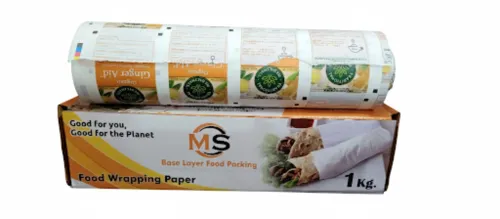
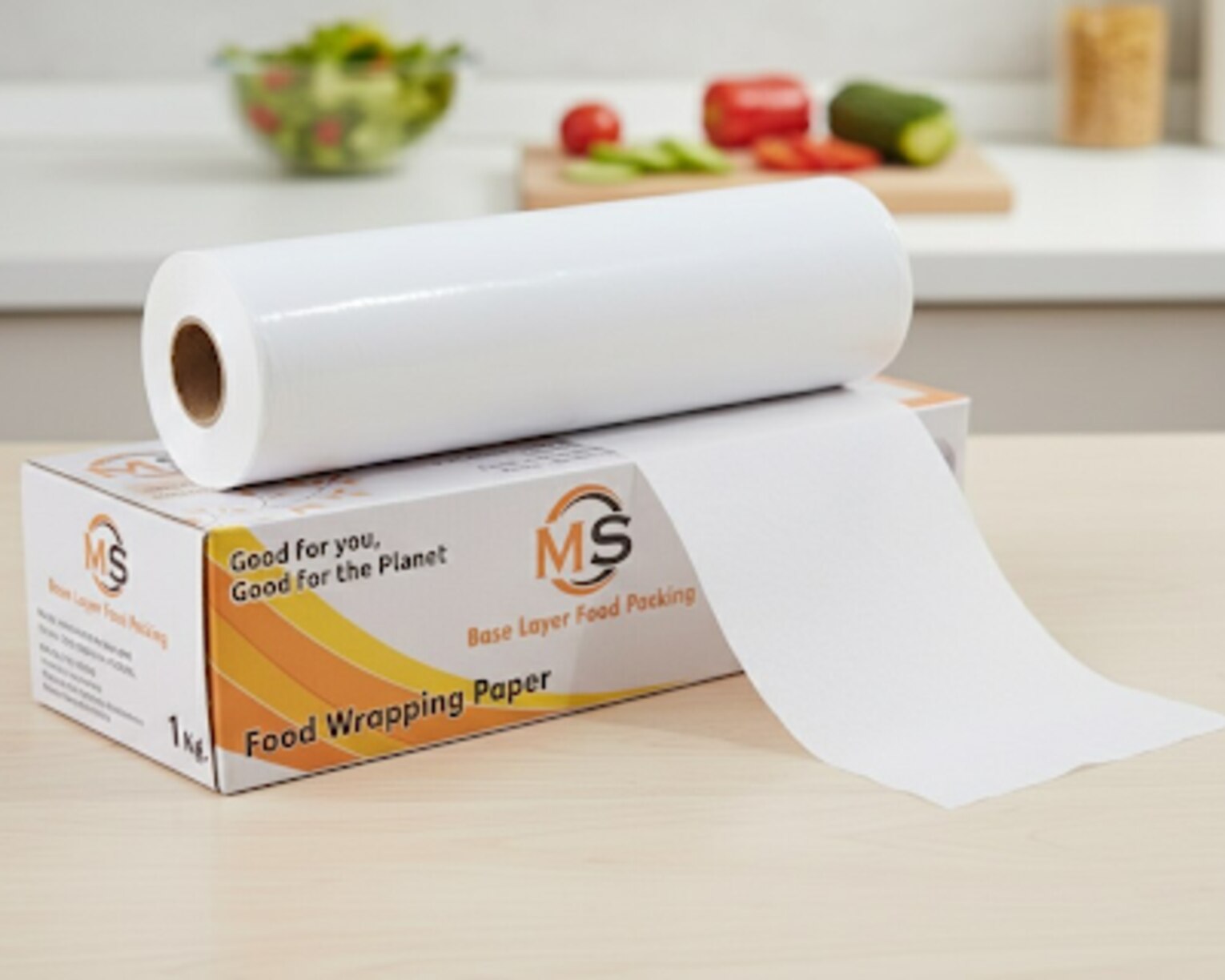
 | Food Packaging Butterpaper roll in 1kg 50-60 gsm available for food wrapping. View product → |
Frequently asked questions
What should you define before comparing butter paper rolls?
Specify the food’s fat and moisture level, contact time, operating temperature, wrapping speed, and whether the pack is folded or heat-sealed.
Which roll details affect wrapping consistency?
Check paper width, basis weight, coating or grease resistance, roll length, core size, winding tension, edge condition, and batch identification.
How should you check a butter paper delivery?
Compare the roll width, length, core, paper specification, quantity, batch number, packaging condition, and documents against the purchase order.
How do you make repeat butter paper orders reliable?
Keep the approved specification, supplier batch records, inspection results, machine settings, and wrapping performance together for each order.
Related products
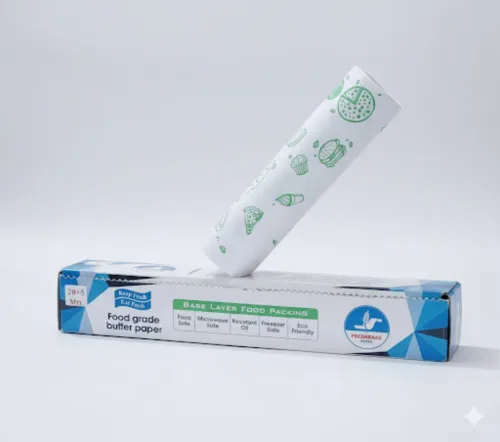
 | Food Packaging Butterpaper Roll In 20+5 Meter butterpaper roll in 25 meter used for food wrapping View product → |
 | Food Packaging ₹135 available in different sizes and different gsm View product → |
 | Food Packaging Butterpaper sheet available in customizable size as per requirement View product → |
 | Butterpaper Butterpaper roll available in 1kg View product → |