A roti paper roll only saves time when its format, cut length and barrier performance match the way your kitchen cooks, stacks and dispatches food. By the end, you will be able to map each packing step, estimate daily roll consumption, choose handling equipment and write a supplier specification that reflects your actual menu and delivery time.
Key takeaways
- Match the paper format to separation, sleeving or parcel protection.
- Specify roll width and GSM from the packed roti portion, not guesswork.
- Measure paper used per portion before setting monthly purchase quantities.
- Request food-contact documents, batch details and a sample packing trial.
Where a Paper Roll Fits in the Roti Workflow
A paper roll for roti serves three different jobs: separating individual breads, forming a portion sleeve, or protecting an assembled parcel. These uses are not interchangeable, so define the roti packing workflow before choosing material.
| Method | Packing action | Performance needed |
|---|---|---|
| Roti interleaving paper | Place a consistent cut piece between each roti | Enough separation to lift one roti without tearing |
| Roti stack wrapping | Fold paper around a fixed portion | Folding strength and a secure closure |
| Outer parcel layer | Wrap a tray or mixed order | Compatibility with tray, curry container and delivery bag; never the only leak barrier |
- Restaurant serving rotis immediately: place cut interleaving pieces between hot rotis as they are stacked, then serve or sleeve the portion. Keep the cuts consistent; oversized pieces waste paper, while small pieces tear during lifting.
- Canteen holding portions on a counter: use roti stack wrapping for the defined portion, close it securely, and check that stacked packs retain their shape during the holding period.
- Cloud kitchen dispatching rotis with gravy or chutney: wrap the roti portion separately, place wet foods in leak-resistant containers, then use paper as an outer parcel layer around the tray or mixed order. Steam and liquid must not rely on that outer paper alone.
- Give the supplier four facts: rotis per pack, direct hot-food contact, holding time before dispatch, and whether packs will be stacked. Add the tray, container and delivery-bag dimensions; “roti paper” is not an application brief.
Choose Width, GSM and Format Around the Portion
Measure the widest roti, add the fold or overlap required by your wrap, and test the finished pack inside its tray or delivery bag. That gives you a practical roti paper width instead of a nominal size that fails during packing.
| Format | Dimension decision | Main trade-off |
|---|---|---|
| Individual interleaving | Roti diameter plus a small handling margin | A narrow roll cuts efficiently, but joined pieces create waste for larger portions |
| Half portion sleeve | Stack width plus overlap for closure | Too little overlap lets the stack open during handling |
| Full meal tray | Tray length and width plus side folds | A wider roll covers the tray, but increases offcuts and cutting time |
| Mixed order | Largest combined tray or parcel footprint | Extra coverage helps fit containers, but uses more material per order |
GSM for roti paper is only one input. Higher basis weight can improve stiffness, tear resistance and separation between oily rotis, but it also increases material use, roll weight and disposal volume. A lighter sheet folds quickly yet can lose shape when condensation forms.
Compare GSM with caliper, tensile strength, tear strength and wet strength. A thinner laminated structure can outperform a heavier uncoated sheet when barrier protection matters.
Decide how staff will make each cut: tear by hand, use a dispenser with a cutting edge, or operate a countertop paper cutter. Ask for roll width, cut length, paper roll core size and maximum outside diameter, then confirm that the roll fits both the equipment and storage rack.
Calculate Roll Consumption Before You Set a Purchase Quantity
Calculate roll usage per order as daily orders × rotis per pack × paper length used per roti or pack ÷ roll length. Run each packing method as a separate line because interleaving, stack wraps and outer parcel layers consume different cut lengths.
| Use | Calculation | Record |
|---|---|---|
| Interleaving | Orders × rotis per pack × cut length per roti ÷ roll length | Dispenser setting |
| Stack wrap | Orders × portions × wrap length per portion ÷ roll length | Number of rotis per portion |
| Outer parcel layer | Orders × parcels × outer-layer length ÷ roll length | Tray and bag size |
Record the planned dispenser cut length, rotis in each portion and expected portions per shift. After one week, compare the calculated requirement with issued roll stock; the difference exposes actual roti paper consumption and improves your roti packing cost estimate.
Track paper cutting waste separately:
- End pieces left on a roll
- Misaligned tears
- Oversized wraps
- Partially used lengths staff discard
A repeatable cutter setting matters more than nominal roll length. Consistent cuts control roll usage per order; a long roll still wastes money when every portion receives extra paper.
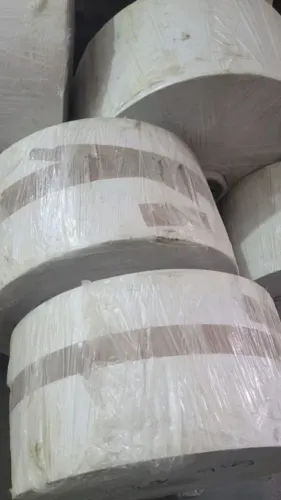
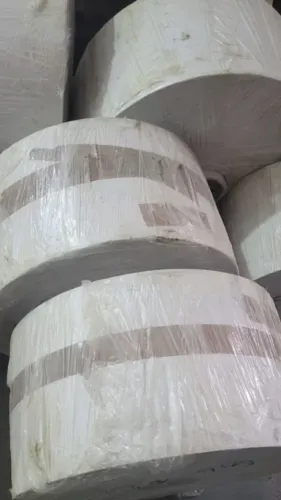
Roll diameter and weight determine whether one person can load the dispenser, how many spare rolls fit beside the station and how often packing stops for changes. Store rolls off the floor, away from moisture, dust and crushing, and rotate batches first-in, first-out.
During a supplier trial, measure grams or metres consumed per 100 orders, not only the price of one roll.
Control Steam, Grease and Sticking During Hot Packing
Prevent roti sticking to paper by managing grease and steam as separate problems. Greaseproof paper for hot food can handle ghee or oil yet lose stiffness when steam condenses inside a closed pack. Good steam management food packaging practice prevents a dry-looking sheet from becoming soggy during holding and delivery.
- Test the actual worst-case menu: the hottest rotis with ghee or oil, plus curry, chutney or gravy in the intended pack. Hold it for the planned service and delivery time at the intended stacking height.
- Inspect both paper and food for tackiness, strike-through, odor transfer, loss of tear strength, delamination and liquid leakage. A sheet that passes with dry rotis has not passed this test.
- Let excess surface steam escape before sealing when the service process permits. Do not compress freshly cooked rotis into a tightly closed stack; ventilate the parcel or place wet foods in a separate leak-resistant container.
- If delivery needs stronger vapour or water protection, specify the coating or laminate and document the required hot-hold and delivery duration. Greaseproof paper is not automatically a barrier to liquid water or prolonged steam exposure.
For foil laminated paper microwave safety, require an explicit microwave-use statement for the finished construction. The foil layer can arc in microwave equipment, even when the paper and foil are individually food-contact compliant. Do not infer microwave suitability from the laminate name.
Turn the Supplier Brief Into a Safe, Verifiable Specification
Approve a repeat order only against a finished-structure specification, not “food grade.” It must identify the paper, coating, printing ink, adhesive and foil, then state basis weight, caliper, tensile strength, tear strength, grease resistance, wet strength, roll width, cut length, core diameter and outside diameter.
1. Request a declaration covering food-contact paper compliance for the intended food types, direct-contact use, temperature and contact time. For United States supply, ask how the structure meets 21 CFR 176.170 for aqueous or fatty foods, or 21 CFR 176.180 for dry foods.
2. For EU supply, request evidence aligned with the food-contact framework and EU Regulation 2023/2006 GMP, including Regulation (EC) No. 2023/2006 good manufacturing practice records.
3. Check the batch number, raw-material traceability, change-control records, test reports and controls that prevent dust, metal fragments or other contamination during slitting and packing.
4. Run a site trial before approval. Test the actual roti temperature, oil level, holding time, stacking height, dispenser and delivery pack, then record sticking, grease strike-through, tearing and odour transfer.
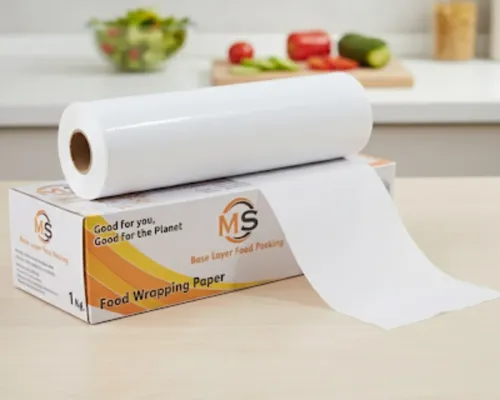
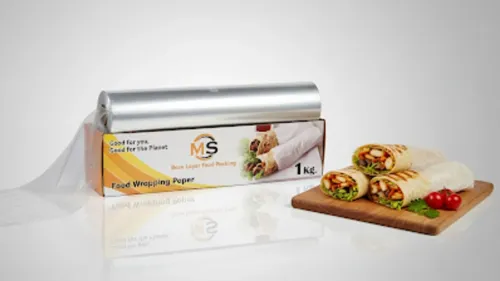
Baselayer Food Packing can help when it converts these operating details into a trial roll and documented specification rather than quoting GSM alone. Verify environmental claims separately: a paper-and-foil laminate is not automatically recyclable or compostable, and recycled fibre is not automatically suitable for direct food contact.
Related products
 | Food Packaging ₹130 available in different sizes and gsm View product → |
 | Food Packaging Butterpaper Roll In 20+5 Meter butterpaper roll in 25 meter used for food wrapping View product → |
Frequently asked questions
Where does a paper roll fit in the roti packing workflow?
Use it to separate individual rotis, form a portion sleeve or protect an assembled parcel. Select the format after defining the workflow.
How do you choose roti paper roll width and GSM?
Choose width from the portion dimensions and closure method, then select GSM that handles the required strength, folding and grease resistance without unnecessary material.
How can you calculate paper roll consumption?
Measure the paper length used for one packed portion, multiply it by portions per shift or month, and add a controlled allowance for trimming and packing errors.
How do you control steam, grease and sticking when packing hot rotis?
Control the filling temperature, allow a practical steam-release path, use suitable grease-resistant paper and test the packed portion for condensation, tearing and sticking.
What should you include in a supplier specification for roti paper?
State the use, roll width, GSM, roll length, core size, printing requirements, food-contact documentation, batch identification and sample-test criteria.
Related products
 | Butterpaper Jumbo Roll (40 to 50gsm) size (10 inch to 12inch) JUMBO ROLL bleach kraft paper available in 40 gsm to 50gsm in various different sizes as per customer requirement. View product → |
 | Food Packaging Butterpaper roll 50 gsm to 60 gsm available View product → |
 | Food Packaging ₹135 available in different sizes and different gsm View product → |
 | Food Packaging Butterpaper sheet available in customizable size as per requirement View product → |