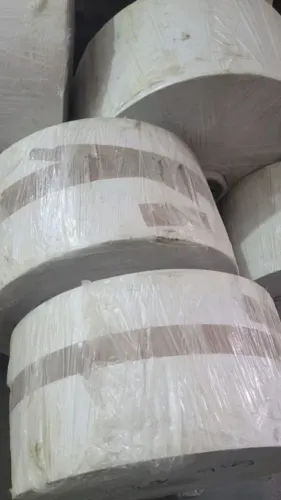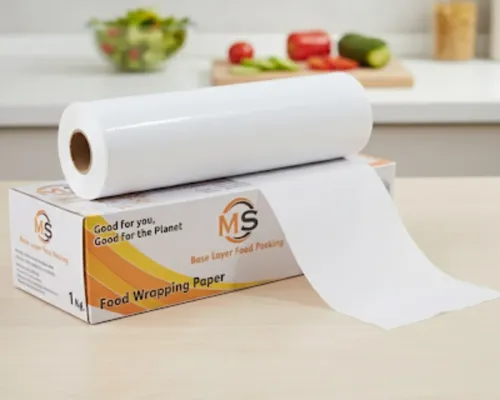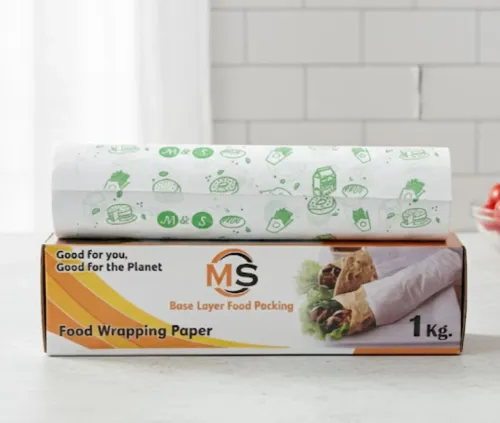
A jumbo roll earns its place when your packaging volume, converting equipment, and replenishment schedule justify handling a large reel instead of buying ready-to-use sheets or small rolls. Use the calculations, equipment checks, material specifications, and supplier controls below to decide whether the lower unit cost will produce more saleable wrappers rather than more waste.
Key takeaways
- Calculate monthly demand using wrapper length, working days, and a waste factor.
- Match reel width, core size, diameter, and paper caliper to your converter.
- Specify grease resistance, basis weight, and moisture performance—not just “butterpaper.”
- Compare delivered cost, web waste, batch consistency, and supply continuity.
Set the volume threshold before choosing a jumbo roll
Calculate monthly paper use before asking a butterpaper jumbo roll supplier for a quotation. Multiply wrappers produced per day by paper length per wrapper, working days per month, and a waste factor based on trimming, setup, splices, and rejected material.
Then compare the delivered cost per saleable wrapper or square metre, not the price per tonne.
| Option | Cost and workflow | Practical threshold |
|---|---|---|
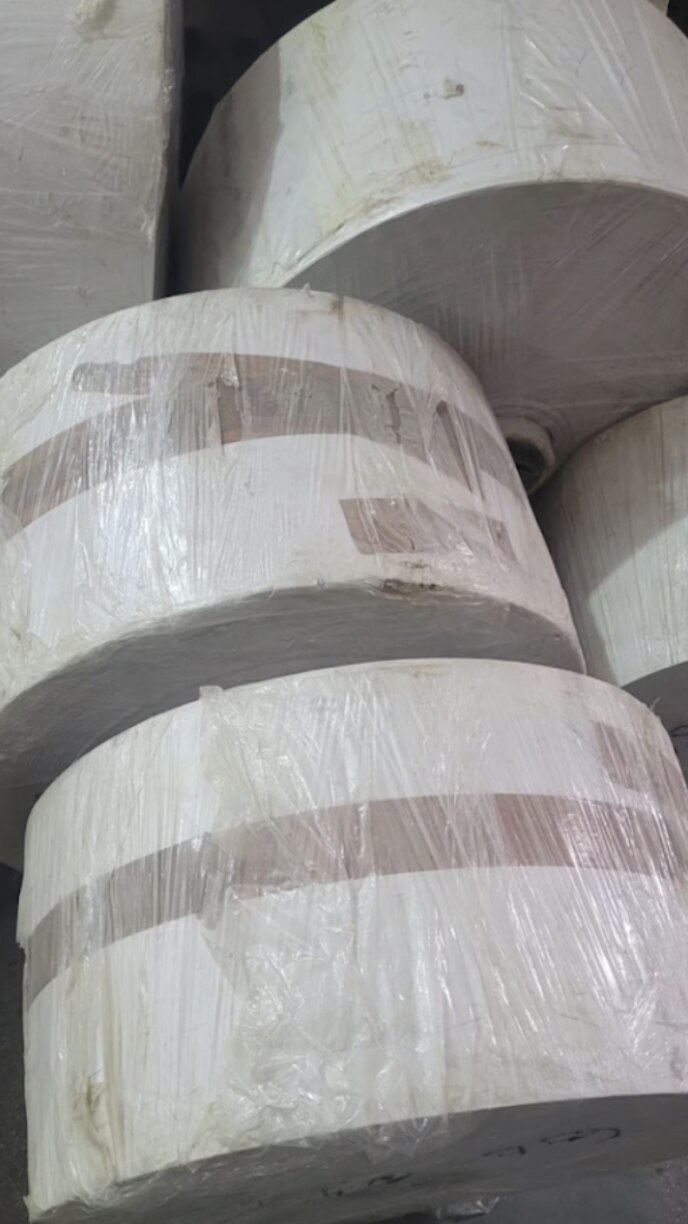
| Jumbo roll | Lowest unit cost after converting, but requires an unwinder, cutter, operator time, and storage space | High-volume packaging operations running daily with predictable demand and few replenishments |
| Pre-cut sheets | Higher paper cost, minimal equipment, fast changeovers | Variable demand, several package sizes, or low monthly consumption |
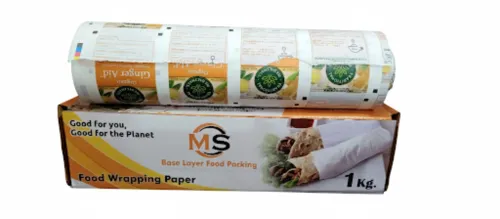
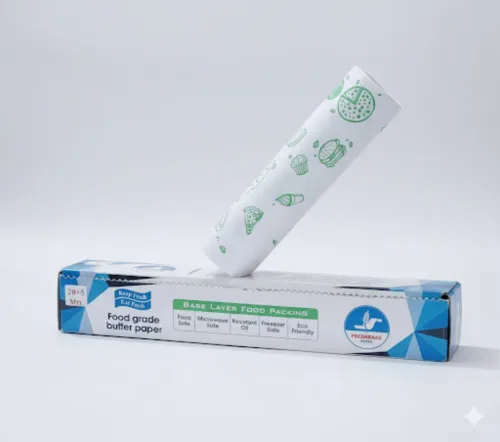
| 1 kg or retail rolls | Easy to buy but frequent roll changes and poor labour efficiency | Trials, small batches, or backup supply |
A useful packaging volume calculation is: daily wrappers × wrapper length × operating days, then divide by usable running metres per roll. Compare that demand with your acceptable replenishment frequency.
If a line needs several roll changes per shift, jumbo purchasing may repay its handling equipment; if one roll lasts weeks, the inventory and storage cost can erase the saving.
Approve the switch only after costing edge trim, startup waste, splice waste, rejected rolls, freight, and conversion losses. Confirm that the supplier’s reel size suits your equipment; a cheap roll that cannot be safely loaded or creates excessive trim is not economical. Use retained samples and agreed tolerances before committing to regular supply.
Match the reel to your converting equipment and package dimensions
A jumbo roll is a practical fit only when your jumbo roll equipment can load, unwind, guide, and cut the reel without repacking or excessive trim. Confirm the line’s physical limits before comparing prices per kilogram.
1. Measure the finished sheet or wrapper width and length, then add the side trim, registration margin, and any fold allowance. The required web width is not automatically the package width.
2. Check the roll stand and paper unwinder for maximum roll mass, outside diameter, core inner diameter, winding direction, and loading method. A reel with the wrong core or diameter can be impossible to mount safely.
3. Match the reel width to the machine’s usable web width. Calculate trim as reel width minus usable lanes; excessive trim can erase the saving from bulk purchasing.
4. Confirm whether the guillotine cutter accepts the paper’s thickness, roll width, and target sheet length. Ask for its cut-length tolerance and verify that the line can count sheets or measure running metres.
5. Specify the maximum reel mass, permitted diameter range, core length, and core strength on the purchase order. Include limits for telescoping, loose edges, curl, and splice placement.
6. Estimate required length with: sheet count × sheet length ÷ 1,000 = running metres, then allow for setup waste, roll-end waste, and rejected sheets. Ask the supplier to state both net usable metres and total metres.
7. Run a trial reel at production speed before approval. Record loading time, web breaks, splice passes, cut accuracy, and waste percentage. A cheaper roll that needs manual correction is not cheaper in operation.
Specify paper performance instead of buying on the name butterpaper
Buy to a performance specification, not the name “butterpaper.” That label can describe genuine greaseproof paper, glassine, vegetable parchment, coated paper, or an aluminum-foil laminate, each with different barrier and machine behaviour.
| Construction | Barrier profile | Suitable use |
|---|---|---|
| Greaseproof paper | Fat resistance; limited moisture barrier | Dry or short-contact bakery and dairy wrapping |
| Glassine | Smooth surface; good grease resistance; limited wet strength | Visible, light-duty wraps and interleaving |
| Vegetable parchment | Strong wet strength and grease resistance | Moist or oily foods needing tougher handling |
| Aluminum-foil laminate | Strong light, oxygen, aroma, and water-vapour barrier | Long shelf life, chilled, or highly sensitive products |
Your greaseproof paper specification should state basis weight, caliper, machine-direction and cross-direction tensile strength, tear resistance, burst or puncture resistance, stiffness, coefficient of friction, and sealability. “Butter paper gsm” alone does not predict wrapping strength or clean cutting.
Request the TAPPI Kit test method, rating, conditioning conditions, and result for the actual construction. The rating compares surface resistance to oil and grease; it does not predict every food, temperature, contact time, or fold.
Separate grease resistance from moisture performance. For chilled or humid packs, request water-vapour transmission rate data. If foil is included, qualify the finished laminate for foil thickness, pinholes, adhesive or coating continuity, barrier values, and seal performance.
For direct food contact, request finished-article compliance for the destination market, including inks, coatings, adhesives, and foil. US fatty-food applications can involve 21 CFR 176.170; EU sales require Regulation (EC) No. 1935/2004 plus applicable specific or national rules.
Control web behaviour, cutting accuracy, and material waste
Operators keep a jumbo roll running at production speed by matching the unwind system to the reel and holding the web on the machine centreline. A small alignment error becomes repeated trim loss or crooked wrappers after thousands of metres.
- Set brake or drive tension for the paper grade, then reduce tension as the roll diameter falls; excessive tension stretches the web, while low tension creates folds and slack loops.
- Use an edge guide and verify that the core is square on the shaft. Stop the line if paper web wandering exceeds the converter’s accepted tracking limit.
- Reject a telescoping paper roll before loading it. A shifted reel can rub the frame, unwind unevenly, or damage its edges.
- Mark every splice and confirm that splice tape survives the cutter and wrapping process. Unmarked splices cause sudden stops and contaminated packs.
- Check the encoder, knife, and guillotine at operating speed, not only during setup. Set paper cutting tolerance against the package’s permitted overhang, then recheck the first and last sheets from each reel.
Record start-up scrap, splice waste, edge trim, and metres remaining on the core. Rising waste points to tension, alignment, or blade wear rather than an unavoidable jumbo-roll cost. Retained samples from accepted reels also give you a direct comparison when basis weight, caliper, curl, or reel hardness changes between lots.
Qualify the supplier on delivered cost, consistency, and continuity
Require documented delivered cost, agreed roll tolerances, and a continuity plan before approving regular production supply. A low tonne price is irrelevant if basis-weight variation, trim, splice waste, freight, and rejected rolls raise your cost per wrapper.
1. Request a quotation based on saleable wrappers or square metres, not tonnes alone. Include usable-width yield, startup waste, edge trim, splice waste, conversion losses, freight, and rejected-roll disposal in the calculation.
2. Approve a retained production sample against defined paper roll quality control limits. Compare lot-to-lot basis weight, caliper, moisture, reel hardness, curl, telescoping, splice frequency, usable width, and visible-defect limits. Require a certificate of analysis showing the agreed fields for every lot.
3. Require continuity evidence before the first repeat order. Ask for the pulp source, coating or adhesive details, converting site, second-source or substitution plan, change-notification period, and a controlled trial before any change in furnish, coating, adhesive, or foil gauge.
4. Verify the actual construction rather than accepting “butterpaper” as a specification. State whether you need greaseproof paper, glassine, parchment, a coated grade, or an aluminum-foil laminate, then specify basis weight, caliper, grease resistance, barrier targets, and destination food-contact market.
5. Request a current declaration for PFAS-free food packaging paper covering paper, coatings, adhesives, and processing aids. Recyclable or compostable claims do not prove that no intentionally added PFAS are present.
If you are assessing Baselayer Food Packing, use these documents and a controlled line trial to judge supply risk, not a catalogue size list.
Related product
 | Butterpaper Jumbo Roll (40 to 50gsm) size (10 inch to 12inch) JUMBO ROLL bleach kraft paper available in 40 gsm to 50gsm in various different sizes as per customer requirement. View product → |
Frequently asked questions
How do you calculate the volume needed for a butterpaper jumbo roll operation?
Multiply wrappers produced per day by paper length per wrapper, working days per month, and a waste factor for trimming, setup, splices, and rejected material.
Which jumbo roll specifications must match converting equipment?
Check reel width, outside diameter, core diameter, basis weight, caliper, winding direction, and maximum roll weight against the machine manual and package dimensions.
What paper performance specifications should you request?
Define basis weight, caliper, grease resistance, moisture tolerance, release behaviour, tensile strength, opacity, and food-contact documentation for the intended use.
How should you compare butterpaper jumbo roll suppliers?
Compare delivered cost per usable wrapper, setup and trim waste, batch consistency, lead time, minimum order quantity, complaint handling, and continuity of supply.