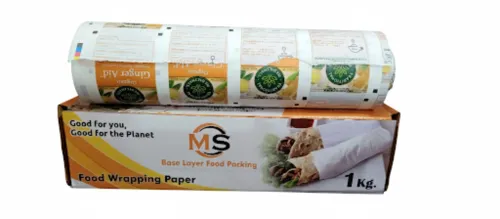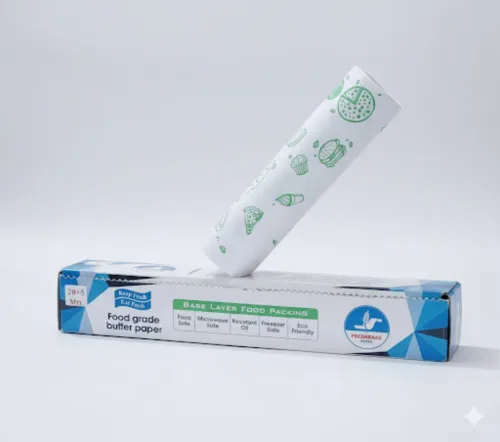
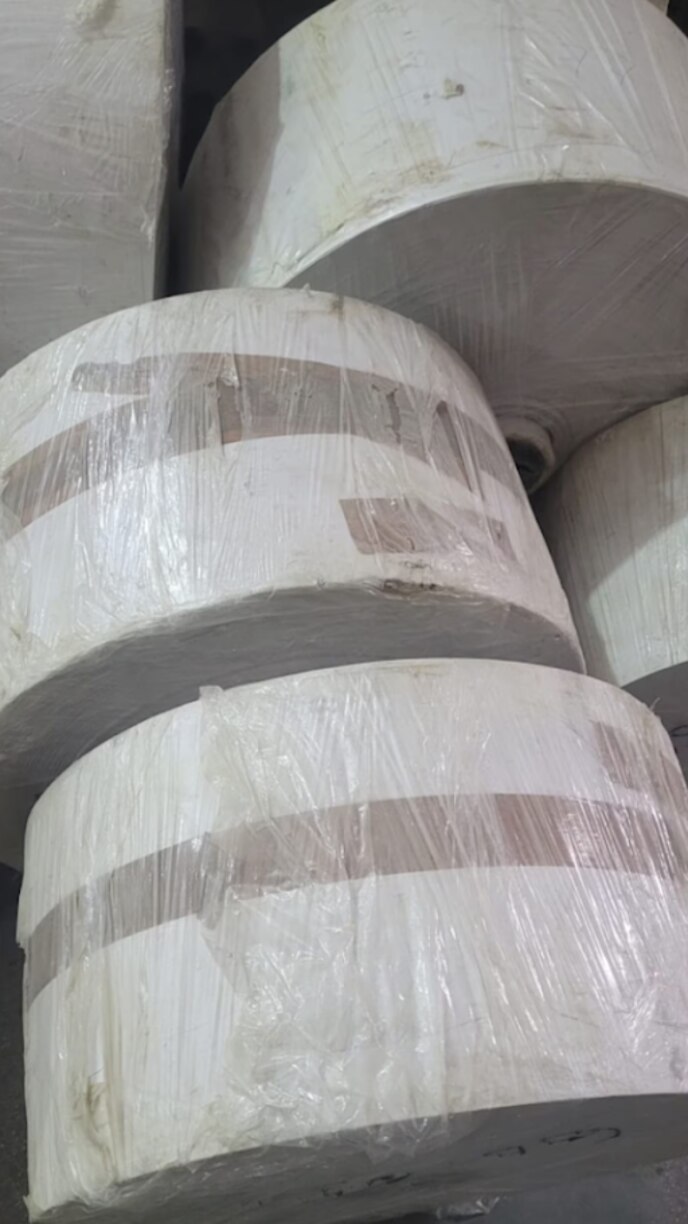
A quoted GSM and roll width do not tell you whether a jumbo reel will run on your converting line, protect food, or arrive without costly winding defects. Before placing an order, you need a written specification covering machine fit, paper performance, food-contact evidence, reel condition, splices, and traceability.
Key takeaways
- Confirm core diameter, roll mass, outside diameter, and web-width limits.
- Compare caliper, tensile strength, porosity, curl, and runnability—not GSM alone.
- Request food-contact declarations for every layer, coating, adhesive, and ink.
- Specify grease resistance with a test method, temperature, contact time, and pass limit.
Match the Jumbo Roll to Your Converting Machine
A quoted jumbo roll width is useless unless it matches your unwind stand, slitter knives, and finished-pack dimensions. Confirm the machine’s maximum roll mass, core inside diameter, maximum outside diameter, and permitted web-width range before accepting a quotation from a butterpaper jumbo roll supplier.
Ask for a signed reel specification, not a nominal GSM alone. It must state:
- Basis weight, GSM tolerance, caliper, and moisture range
- Paper length tolerance, measured reel length, and winding direction
- Core inside diameter, maximum outside diameter, and maximum roll mass
- Jumbo roll width, web-width tolerance, edge-trim condition, and edge damage limit
- Telescoping limit, blocking requirement, and splice construction and location
| Machine detail | Confirm on the supplier’s specification | Failure if mismatched |
|---|---|---|
| Core inside diameter | Exact core size and allowable ovality | The reel will not mount or will wobble during unwinding |
| Jumbo roll width | Finished width, trim allowance, and width tolerance | Slitting losses, tracking faults, or unusable edge trim |
| Outside diameter and mass | Maximum values accepted by the unwind stand | The reel cannot load safely or overloads the shaft |
| Paper length tolerance | Nominal metres, measuring method, and permitted variance | You run short of wrap stock or receive less usable area than quoted |
Request test results from the actual production reel or batch. GSM and caliper variation change square-metre yield, fold settings, heat-seal response, and web tension; moisture variation can also cause curl, wrinkles, and poor tracking.
Require edge quality, splice type, and telescoping limits in the purchase order, because food-contact approval does not make a reel mechanically suitable.
Compare Performance Beyond GSM
A jumbo roll is production-ready only when its basis weight, caliper, moisture, and strength stay within stated tolerances—not merely when its nominal GSM matches your order. Ask for test results across the reel, plus permitted reel-length variation; GSM and caliper shifts change square-metre yield, fold crispness, heat-seal settings, and web stability.
| Property | Compare | Production consequence |
|---|---|---|
| Basis weight | Nominal GSM versus measured range | A low or high range changes yield and stiffness |
| Caliper | Micrometre readings and uniformity | Uneven folds, pressure, and seal settings |
| Tensile strength | Machine-direction and cross-direction values | Web breaks during unwinding or conversion |
| Tear resistance | MD and CD results | Nicks become splits around folds and cuts |
Run a representative reel through the actual folding, printing, cutting, and sealing sequence. Record breaks, wrinkles, dust, cracking, and rejected packs; paper that passes a laboratory strength test can still fail at your line speed. Check moisture too, because an out-of-range sheet curls, slips, or folds inconsistently.
“Greaseproof” is not a measurable acceptance criterion. Specify a quantitative kit-rating method and pass endpoint for the intended butter or oil contact; Cobb water absorptiveness measures water uptake, not oil penetration. For grease-resistant grades, require written confirmation of no intentionally added PFAS and the supplier’s verification method.
Before approval:
- Request basis-weight, caliper, moisture, tensile-strength, tear-resistance, grease-test, and reel-length reports.
- Test the grade at production speed with your actual folding and sealing settings.
- Reject any batch that meets GSM but misses the strength range or grease-resistance endpoint.
Demand Food-Contact Evidence for the Finished Structure
Request food-contact compliance evidence for the complete jumbo-roll construction, not just the base paper. A paper-mill certificate does not cover foil, adhesive, coating, ink, or polymer layers that touch food. The evidence must match your food, contact time, and highest temperature.
Ask the supplier for:
- A specification sheet naming the exact grade, layer sequence, recycled-fiber percentage, coatings, adhesives, inks, and intended food types.
- A Declaration of Compliance identifying single-use status, contact temperature and duration, and the legal rules used. “Food grade” alone does not prove suitability for fatty foods, hot filling, baking, or retort processing.
- A migration test report performed on the finished structure. Testing only uncoated paper, or using a water simulant for oily food, can understate migration.
- Written confirmation that the grade is PFAS-free greaseproof paper, including the no-intentionally-added-PFAS requirement and the supplier’s verification method.
- For recycled content, deinking or cleaning controls and contaminant-control evidence. Ask whether the material follows BfR Recommendation XXXVI and its recycled-paper guidance.
| Use-case | Evidence to demand | What it must represent |
|---|---|---|
| Cold butter wrapping | Overall migration and fatty-food migration | Actual butter or a suitable fatty-food simulant at storage temperature and stated duration |
| Hot filling | Specific migration and overall migration | Finished structure exposed to the filling temperature, cooling period, and contact time |
| Oven, microwave, or retort use | Application-specific migration and material integrity data | The declared process temperature, exposure time, heating method, and food type |
For EU supply, the declaration should address Regulation (EC) No. 1935/2004 and GMP under Regulation (EC) No. 2023/2006. A cold-wrap qualification does not authorise oven or retort contact.
Set a Quantitative Grease-Resistance and Use Specification
A supplier’s word “greaseproof” gives you no pass/fail limit. Put a named method, test conditions, and endpoint in the purchase specification: for example, a TAPPI T 559 kit rating with a minimum rating agreed for the food, plus no visible strike-through after the stated exposure.
Add an oil penetration test for liquid oil and record temperature, contact time, pressure, coated side, and whether testing covers the paper alone or the finished structure. Cobb water absorptiveness measures water uptake; it cannot replace a grease resistance test.
Define suitability by the actual use:
- Butter: test fatty-food contact at the declared storage temperature and maximum contact duration, using the finished butter paper for oily food structure.
- Oily bakery products: test with representative fat or oil, including the product’s heat and contact time, then set a minimum kit rating and penetration limit.
- Frozen foods: test at the freezer temperature, after flexing and thawing, because condensation and cracking can open paths for oil.
- Hot foods: specify the maximum product temperature and exposure time. Hot filling, direct oven contact, microwave use, and retort processing require separate qualification.
- Acidic foods: request migration testing with food simulants that represent acidic products, on the complete paper, coating, ink, adhesive, or foil structure.
Require a no-intentionally-added-PFAS statement and the supplier’s verification method. For U.S. supply, check the applicable finished-structure evidence against 21 CFR 176.170 or 21 CFR 176.180 rather than accepting “food grade.”
Control Reel Condition, Splices, and Supplier Traceability
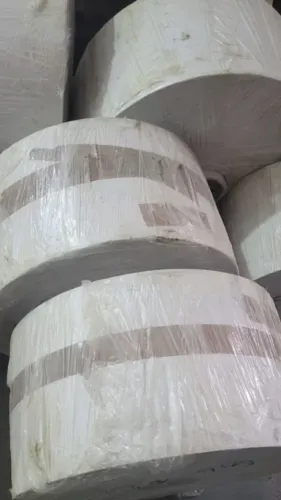
Put reel acceptance limits in the purchase order, not in an informal email. A jumbo roll can meet its GSM specification and still damage a high-speed line through a loose edge, blocked layers, or an incorrectly built splice.
1. State the core inside diameter, maximum outside diameter, maximum roll mass, winding direction, finished web width tolerance, reel-length tolerance, and allowable basis-weight, caliper, and moisture ranges. Reject reels outside any limit because they may not mount, track, or unwind safely.
2. Define edge quality: no crushed edges, loose tails, torn layers, contamination, or wrinkles that enter the usable web. Set the maximum permitted telescoping in millimetres and reject any reel with blocking, adhesive transfer, or layers that cannot unwind cleanly.
3. Specify splice construction. State the maximum number of splices per reel, splice position or marking method, tape or adhesive type, maximum splice thickness, and required bond strength. Prohibit exposed metal, lifted tape, overlapping material that changes caliper, and an unmarked splice that can reach the cutter unexpectedly.
4. Require jumbo roll inspection records for diameter, mass, width, moisture, defects, and splice count before dispatch. Each reel must carry a readable reel number linked to the paper furnish, coating or lamination batch, production date, and operator or line record.
5. Require roll traceability, retained samples, photographs of defects, and a written complaint procedure covering quarantine, replacement, and investigation. For Baselayer Food Packing, ask that these records accompany the delivery rather than relying only on a mill certificate.
Accept only reels whose labels, inspection results, and physical condition agree with the purchase order. Keep the reel number on your converting report so a splice, contamination event, or winding failure can be isolated to one production batch.
Related product
 | Butterpaper Jumbo Roll (40 to 50gsm) size (10 inch to 12inch) JUMBO ROLL bleach kraft paper available in 40 gsm to 50gsm in various different sizes as per customer requirement. View product → |
Frequently asked questions
What machine details must bulk buyers confirm before ordering a jumbo roll?
Confirm the unwind stand’s maximum roll mass, core inside diameter, maximum outside diameter, and permitted web-width range. Check that the quoted width also suits your slitter knives and finished-pack dimensions.
Why is GSM insufficient when comparing butterpaper jumbo rolls?
Compare caliper, tensile strength, tear resistance, porosity, curl, moisture, and web runnability alongside GSM. These properties affect slitting, feeding, folding, and converting performance.
What food-contact evidence should a buyer request?
Request a food-contact declaration covering the paper, coatings, additives, adhesives, foil, and inks in the finished structure. Match the evidence to the food type, contact temperature, contact time, and intended use.
How should grease resistance be specified for a jumbo roll?
Define the test method, grease type, temperature, contact duration, and acceptance limit. Use the finished converted structure for testing when coatings, foil, adhesives, or printing change performance.
What reel and traceability checks reduce jumbo roll delivery problems?
Inspect reel edges, winding tightness, telescoping, core condition, moisture damage, labels, and splice count. Require batch identification, a certificate of analysis, production records, and a documented splice policy.